Operate a forklift safely in a shared warehouse space
A practical guide to separating vehicle movement from pedestrian work without relying on eye contact alone.
- Published: 24 July 2026
- Practical guide
- Warehouse operations
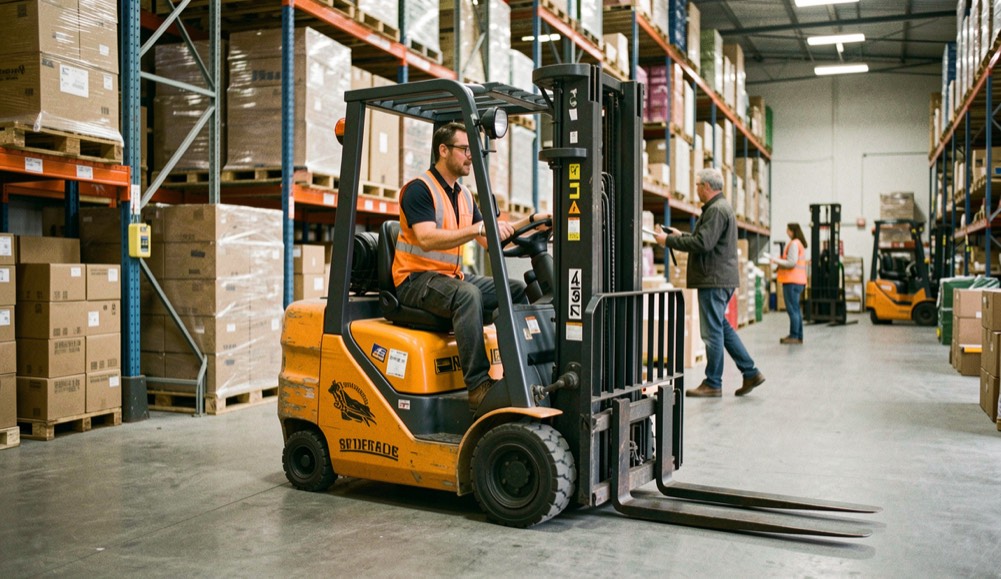
Build a safer shared warehouse routine with visible pedestrian lanes, controlled crossings and load awareness. The useful answer depends on the local layout, the goods and the people who use the process, so this guide starts with observations that can be checked on site.
Separate the two systems
A shared aisle is a coordination problem, not just a driving problem. Make pedestrian lanes, crossings and vehicle paths visible. Use barriers or marked waiting points where the layout allows, and keep storage from hiding the approach to a crossing.
Treat the load as part of the vehicle
The load changes visibility, turning space and stopping behaviour. Before moving, check that it is stable, within the equipment limits and positioned so the route remains readable. If the load blocks the forward view, use the approved travel method for that workplace instead of improvising.
Use a repeatable handover
Shared spaces become safer when the next person can read what is happening. Agree how a vehicle announces a crossing, where pedestrians wait and who has priority at blind points. Reinforce the routine with observations and maintenance notes, not only after an incident.