Thickened tailings: what the term names
Thickened tailings names a tailings stream that has been dewatered before transport, together with the preparation step that produces it.
- Published: 15 September 2026
- Practical guide
- Warehouse operations
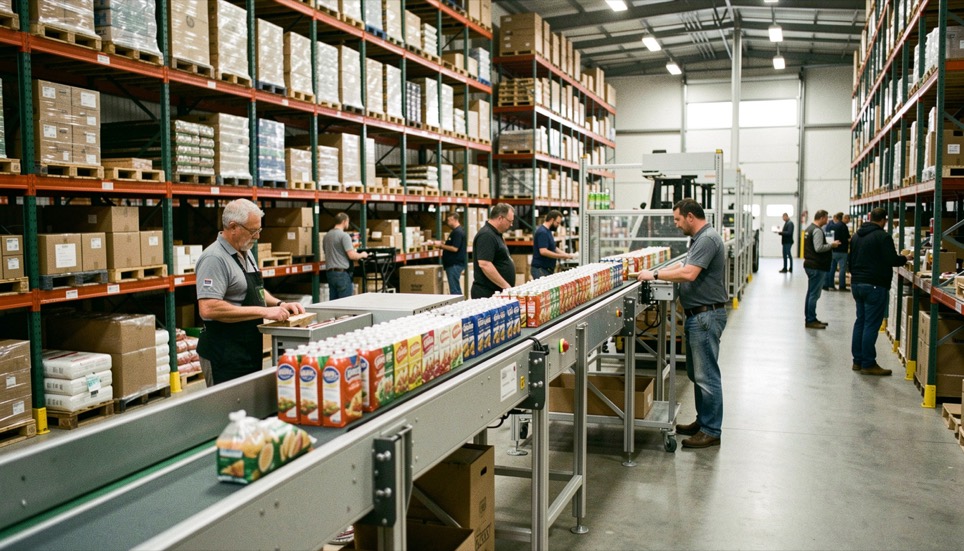
The term names a tailings stream and a preparation step, not a deposition method or a grade, so check the wording before quoting any plan figure. The useful answer depends on the local layout, the goods and the people who use the process, so this guide starts with observations that can be checked on site.
Thickened tailings names a tailings stream that has been dewatered before transport, together with the preparation step that produces it. It does not name a deposition method, a site design or a grade of material. The phrase describes what is being moved and how it was prepared, and the deposition method is a separate decision recorded elsewhere in the plan.
What does thickened tailings name, and what does it not name?
The term names two things and stops there. First, it names a stream: the slurry that leaves the processing plant after some water has been removed. Second, it names a preparation step: the thickening that raises the solids concentration before the material is pumped or conveyed. What it does not name is a disposal technique, a beach slope, a stack geometry or a regulatory category. A plan can therefore say thickened tailings and still describe several different deposition arrangements, because the term sits upstream of those choices.
The distinction matters because readers often treat the phrase as a synonym for a method. It is not. A document that uses thickened tailings as a label for a whole facility is compressing two separate records into one word, and the compression is where misquotation begins. Notes on the terminology, such as those collected at thickened tailings notes, treat the phrase as a description of a stream and a step, and keep the method in a different part of the record. That separation is the useful habit: ask what is being named, then ask where the method is written down.
How do thickened, paste and filtered deposition differ beyond the label?
Beyond the label, the three arrangements differ in transport, in how much water is recovered, and in the governance they attract. The label alone tells a reader very little, because the same word can appear in plans with quite different operating assumptions.
Transport is the first practical difference. A thickened stream can still be pumped over distance, which keeps pipelines and pump stations in the method statement. A paste-like material moves with different equipment and different pressure assumptions, and its behaviour in a line is not the same as a dilute slurry. A filtered material is handled as a damp solid, which usually means conveyors, trucks or stackers rather than a pipeline. Each choice changes the equipment list, the maintenance routine and the emergency procedures that belong in the plan.
Recovered water is the second difference. Dewatering before deposition returns more water to the plant, and the point at which that water is counted matters for the site water balance. A plan that claims a recovery figure without saying where in the circuit the water is measured is not comparable with one that does. Readers comparing two documents should look for the measurement point, not the headline percentage.
Governance is the third difference. The Global Industry Standard on Tailings Management, published in 2020, sets expectations about accountability, roles and public information that apply across deposition choices, but the way a site demonstrates them depends on the method. A filtered stack and a thickened discharge raise different questions about stability, dust, closure and monitoring. The method statement is where those questions are answered, and it is the part of the record that a non-specialist reader can actually check.
What belongs in a deposition plan and its method statement?
A deposition plan is a linked set of documents rather than a single drawing. The parts that matter to a reader trying to verify a claim are usually these:
The plan drawing itself, showing where material is placed and in what sequence. The method statement, describing how the material is transported, placed and worked. Named roles, so that a reader can see who decides and who is accountable. The classification of the facility, which determines which requirements apply. The knowledge base behind the design, including the studies and assumptions used. The monitoring and surveillance arrangements, including what is measured and how often. The public information commitments, which set out what is published and when.
A method statement that omits transport assumptions, or that names no accountable role, is incomplete for the purpose of review. The same applies to a plan that shows a final landform without showing the sequence that produces it. For readers outside the industry, the useful test is simple: can each claim in the summary be traced to a part of the plan that says how it will be done and who is responsible?
Why does the exact wording matter when a plan figure is quoted?
Exact wording matters because a figure taken out of a plan travels without its conditions. A number copied from a deposition plan usually depends on a stated concentration, a stated transport assumption, a stated measurement point and a stated time frame. Remove any of those and the number becomes a different claim.
Consider a quoted recovery rate. If the plan defines it at the thickener underflow and a summary repeats it as water returned to the process, the two statements are not the same. Consider a quoted beach slope or stack height. Those depend on the deposition method and the sequence, so a figure lifted from one method cannot be used to describe another. Consider a quoted tonnage. It may refer to a design year, a life-of-facility total or a single campaign, and the plan will say which.
The practical rule for anyone citing a plan is to quote the sentence, not the number. If the sentence is too long, quote the clause that carries the condition, and note the section it came from. Where a term such as thickened tailings appears in the quoted passage, check whether the plan is using it for the stream, for the preparation step, or loosely for the whole operation. That check takes a minute and prevents most errors of attribution.
How should a non-specialist read the terminology?
A non-specialist reader can work through the terminology in a fixed order. Start with the stream: what material is being moved, and at what concentration. Move to the preparation step: where the water was removed and where it was returned. Then find the method: how the material is transported and placed. Finally, find the governance: which roles are named, how the facility is classified, and what is published.
This order keeps the term in its place. Thickened tailings describes the first two steps, and the remaining questions belong to the plan and its method statement. A reader who follows the order can compare two sites without assuming that the same word means the same arrangement, and can quote a figure with its conditions attached.
What should a citation include?
A citation of a plan figure should carry four things: the exact wording used in the plan, the section or document it came from, the conditions attached to the figure, and the date of the version consulted. Plans are revised, and a figure that was correct in one revision may be superseded in the next. Naming the version is part of the quotation, not an optional extra.
Where the term thickened tailings appears in the cited passage, the citation should make clear which sense is intended. If the plan uses the phrase for the stream and the preparation step, the citation should not extend it to the deposition method. If the plan uses it loosely, the citation should say so rather than repeat the looseness as fact. This is the whole point of treating the phrase as a term of record: it names a stream and a step, and everything else has to be found, quoted and attributed on its own terms.
Continue with a related guide
- Track inventory with barcode and RFID technology21 August 2026
- Choose between pallet racking and shelving systems07 July 2026
- Maximise vertical storage space in low-ceiling warehouses12 August 2026
Terminology aside, the same habit of checking words against the physical object applies to the metal around a site. A tank, a hopper or a support bracket is often described by its duty rather than by how it was made, yet the difference between a casting, a bolted assembly and a forged part decides how it behaves under load and heat. Readers who want that distinction set out plainly can follow the hot iron trade, which explains what fire, anvil and tongs settle before a part ever reaches a warehouse floor.
The wording used on this page follows the Global Industry Standard on Tailings Management, published in 2020 by the Global Tailings Review with ICMM, which sets out the accountability, roles and public information expectations referred to above. That document is the published source behind the terminology discussed here, so a reader checking a quoted figure can trace it back to the original text. Where a plan or method statement cites a term, the tailings management standard gives the reference point for how responsibilities and disclosures are framed.